

Environmental Targets and Results
We will ensure compliance with laws and regulations so that the global and natural environments are properly preserved and future generations can inherit a rich global environment. At the same time, we will meet the expectations of our stakeholders and local communities by addressing climate change through promoting energy efficiency and conservation and reducing greenhouse gas emissions, promoting green procurement, and reducing waste and promoting recycling from a life-cycle perspective in our business activities.
Climate-related Targets
We are committed to achieving carbon neutrality with net-zero greenhouse gas (GHG) emissions (Scope 1 and 2) by 2050. Furthermore, based on the Science Based Targets (SBT) criteria, we aim to reduce Scope 1 and 2 GHG emissions by 32.7% by FY2028 and 42.0% by FY2030, compared with FY2021 levels.
Initiatives to reduce environmental impact
Promoting energy efficiency and conservation and reduction of greenhouse gas emissions
Business classification system based on the Act on Rationalizing Energy Use
In accordance with periodic reports submitted to the Ministry of Economy, Trade and Industry for FY2025 under the Act on Rationalizing Energy Use, our business received a Class A rating, indicating the expectation for further efforts in energy efficiency and conservation.
| Fiscal year for submission | 2023 | 2024 | 2025 |
|---|---|---|---|
| Most recent year-on-year change in energy intensity | 121.5% | 95.6% | 92.0% |
| Average over five years | 104% | 104% | 101% |
| Class | A | A | A |
As of August 31,2026
Energy conversion to liquefied natural gas (LNG)
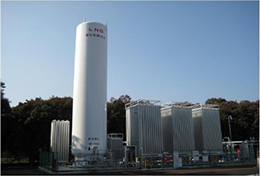
Since 2009, the Harima Plant has been working to reduce greenhouse gas emissions through initiatives such as the conversion of boiler fuel to liquefied natural gas (LNG). In 2011, we registered for the domestic credit system certification (currently the J-Credit Scheme) and transferred a total of 15,000 tons of CO2 reduction credits between 2010 and 2017.
Building on these achievements, we continue to promote energy efficiency and conservation measures as well as initiatives to improve energy performance. Looking ahead, we will further advance energy transition efforts while contributing to the realization of a decarbonized society.
Energy efficiency and conservation activities
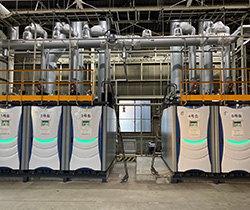
We have established a working group across all production sites to continuously promote energy efficiency and conservation activities aimed at reducing energy consumption.
As part of these efforts, the Harima Plant upgraded its boiler facilities in 2023, achieving a 6.4% improvement in overall efficiency. This initiative has resulted in an annual reduction of approximately 244 tons of CO2 emissions.
In recognition of its energy-saving impact, this project was selected for support under the Advanced Energy Conservation Investment Promotion Support Project subsidy program.
Renewable Energy Utilization
Installation of Solar Panels and Energy Storage Systems
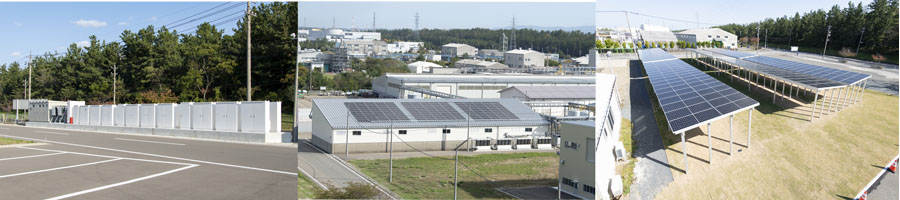
At the Fukui Plant, solar panels with a total output capacity of 497 kW have been installed on factory rooftops and carports, and energy storage systems with a total capacity of 538 kW have been introduced within the same site.
Through these initiatives, approximately 10% of the plant’s total electricity consumption is supplied by on-site power generation, contributing not only to reduced environmental impact but also to enhanced preparedness for disasters.
100% Renewable Electricity through Hydropower
At the Fukui Plant, all electricity consumption has been switched to hydropower-derived renewable electricity since fiscal year 2022.
As a result, CO2 emissions associated with electricity use have been effectively reduced to zero.
Promotion of recycling
The NAGASE Group’s environmental policy promotes resource conservation, including the reduction of energy and water usage, as well as waste reduction and recycling.
In alignment with this policy, we are working to realize a circular economy that balances economic growth with environmental impact reduction. Our initiatives include controlling the concentration of chemical ingredients used in semiconductor and flat panel display manufacturing processes to extend their lifecycle, reducing chemical usage, and reusing spent chemicals through distillation.
Promotion of green procurement
The basic principle for the management of hazardous chemical substances at our company is not to allow prohibited substances into our offices/factories, that is, not to manufacture prohibited substances and not to purchase raw materials containing prohibited substances.
We have established an organization specializing in chemical substance management to comply with domestic regulations and various laws and regulations, including the EU RoHS Directive and industry and customer requirements. We are working to reduce the environmental impact of our products by voluntarily reducing or eliminating the use and discharge of chemical substances where there is concern about their environmental risks.
Biodiversity conservation
We conduct our business activities in accordance with the NAGASE Group’s Basic Approach to Biodiversity and its Business Activity Policies.
Human and corporate activities can have various impacts on local ecosystems. As part of our commitment to creating a safe, secure, and warm society where people can live comfortably, we have long supported local greening initiatives.
The NAGASE Group sets voluntary environmental standards that are stricter than those required by laws, municipal regulations, and agreements related to pollution prevention, and strives to comply with them as part of its basic approach to pollution control.
In line with this approach, we maintain rigorous control over wastewater discharged from our manufacturing sites to fulfill our responsibility to protect the environment and biodiversity of rivers, watersheds, and marine areas.
Basic Approach to Water Resources
The Sustainable Development Goals (SDGs) established and promoted by the United Nations include securing a stable supply of water and richer lifestyle, including access to water for all people.
Here, the NAGASE Group works to rigorously reduce, reuse, and recycle in its business activities, striving to improve its use efficiency and reduce its usage volumes.
Especially in areas with high water stress, we take measures according to the details of the risk by analysis using the Water Risk Filter (WRF).
Water Resource Management
Water intake
All of our sites draw water from third-party water supplies. In addition, the Harima Plant also draws water from groundwater.
Water drainage
Due to the geographical conditions of the site, water is discharged into the river basin at the Harima Plant. At the time of discharge, we promote various measures, such as reducing the pollution load to improve the water environment and set management standards to maintain the quality of wastewater so that it conforms to environmental standards.
Recycling
Condensed water after steam generation is reused for boiler water supply at several sites. Recycled water is also used for cooling in water-cooled chillers.
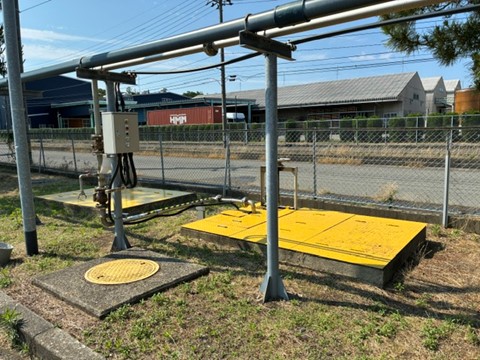
At the Fukui Plant, rainwater is stored in tanks and effectively utilized as dilution water in the wastewater treatment process.
In addition, all drainage channels within the plant are connected to collection pits, enabling the prevention of wastewater discharge to the outside and ensuring appropriate management and response in the event of chemical spills caused by disasters or equipment failures.
Engagement to conserve water quality at production sites
In the water risk assessment (basin risk) of manufacturing sites conducted in fiscal year 2026 using the WWF Water Risk Filter, the Harima Plant was evaluated with a basin risk score of 2.24.
One of the Largest ozone-generating wastewater treatment facilities in Japan
We treat wastewater generated from our manufacturing processes using advanced wastewater treatment facilities, and discharge it into rivers only after ensuring that the water quality meets or exceeds regulatory standards. As part of our effort to reduce our environmental impact, we have continuously improved and upgraded our wastewater treatment methods and facilities. Wastewater that could not be fully purified in the past and was treated as industrial waste is now purified on-site to reduce environmental impact through waste reduction. Furthermore, we have introduced an Advanced Oxidation Process (AOP) facility utilizing ozone technology to prevent the discharge of wastewater that exceeds regulatory limits in the event of a COD level increase.
Utilization of well water (groundwater)
The NAGASE Group considers the 3Rs of water—reduce, reuse, and recycle—to be important initiatives for conserving limited water resources. At our Harima Plant, located in the Ibo River basin where groundwater is abundant, we use groundwater as cooling water in our manufacturing processes. We also promote the 3Rs of water at our manufacturing sites by cascading the use of cooling water as cleaning water in other processes.
Reducing Environmental Impact through Products
We have identified the following material issues: “Transform our chemical plant into an environmentally-friendly facility.” and “Creating a brighter future through chemical materials and technology development.”
We view environmental risks, including climate change, not only as challenges but also as opportunities to drive our business forward.
Contributing to Sustainable Agriculture Through the Power of Mycorrhizal Fungi™
We contribute to the realization of sustainable agriculture through the development and promotion of products that harness the functions of mycorrhizal fungi, microorganisms that form symbiotic relationships with plants.
Mycorrhizal fungi live in association with plant roots and help plants absorb nutrients such as phosphorus, as well as water, from the soil. In return, plants provide the fungi with nutrients produced through photosynthesis. Through their extensive network of hyphae, mycorrhizal fungi transport nutrients and water to plants, creating a mutually beneficial relationship.
Our mycorrhizal fungi product, amxact™, utilizes this natural mechanism to support crop growth. The use of mycorrhizal fungi is expected not only to enhance crop productivity, but also to reduce fertilizer inputs and improve soil health.
Through the utilization of mycorrhizal fungi, we seek to enhance resource efficiency, support biodiversity conservation, and contribute to more sustainable and resilient food systems.
Joint Development of Adult Disposable Diapers with Bio-based Super Absorbent Polymers
Nagase & Co., Ltd., Nagase Viita and Nagase ChemteX have jointly developed a biodegradable bio-based super absorbent polymer (SAP) derived from starch. This material is expected to contribute to resource circulation, and development is underway for its application in adult disposable diapers.
In addition, Nagase & Co., Ltd. and Nagase ChemteX are promoting initiatives for the recycling of used disposable diapers. Nagase ChemteX is verifying separation and material recovery technologies for sanitary materials, while Nagase & Co., Ltd. is developing a recycling scheme in collaboration with governments, municipalities, waste management companies, and nursing care facilities. Through these efforts, which aim to establish resource circulation for used products, the companies are expected to contribute to the reduction of waste and CO2 emissions.
Reducing Environmental Impact through GREEN DENACOL
As part of our efforts to develop environmentally conscious products, we are promoting GREEN DENACOL, a biobased epoxy compound made from plant-derived raw materials, as an alternative to conventional petroleum-based DENACOL products. While maintaining the functionality of existing products, GREEN DENACOL contributes to reducing dependence on fossil resources and lowering CO2, emissions through the use of renewable resources. Through the development and commercialization of sustainable products, we contribute to climate change mitigation and the reduction of environmental impact throughout the product life cycle.
GREEN DENACOL (Biobased Epoxy Compound) | Nagase ChemteX CorporationEnvironmental education
We conduct regular training for all employees every year to educate them about ISO 14001 and the environment. We also provide necessary training in a timely manner, such as new employee training, training by job level, and when laws are revised.