

High-Heat-Resistant Epoxy Resin for Use on Metals
For bonding metal components and for insulating and protecting electronic devices, epoxy resins capable of withstanding high-temperature environments are indispensable.
This article explains in detail the types of high-heat-resistant epoxy resins used for metals, their applications, and important points to consider during use.
Table of contents
- DENACOL|High-Heat-Resistant Epoxy Resin
- Applications of High-Heat-Resistant Epoxy Resins for Metals
- Types of High-Heat-Resistant Epoxy Resins for Metal Applications
- Key Requirements for High-Heat-Resistant Epoxy Resins Used on Metals
DENACOL|High-Heat-Resistant Epoxy Resin
DENACOL offers an extensive product portfolio and is widely used across a range of industrial applications.
Features
DENACOL consists of specialized epoxy compounds obtained through the glycidyl etherification (or esterification) of alcoholic hydroxyl groups and carboxyl groups. A broad range from monofunctional to multifunctional grades is available, with a particularly large selection of water-soluble types. These materials are suitable for water-based processing and enable VOC-free formulations.
Furthermore, bio-based grades derived from plant-based raw materials are gaining attention as next-generation epoxy compounds that combine lower environmental impact with the transition to sustainable materials.
Lineup
One of the main strengths of the DENACOL series is its wide range of grades, allowing users to choose the most suitable option for their intended application.
Because multifunctional types possess multiple epoxy groups, they can form a strong three-dimensional crosslinked network, leading to enhanced dimensional stability as well as superior heat and chemical resistance, making them well-suited for metal adhesion and modification applications.
Low-chlorine grades feature substantially reduced chlorine levels and are well-suited for electronic materials, coatings, and other applications where chlorine-related degradation or corrosion can be problematic. The product lineup includes both multifunctional and monofunctional types, with the lowest chlorine content reaching 100 ppm.
Green DENACOL (high bio-based grades) is a sustainable product series that leverages plant-based raw materials to support the transition away from conventional petroleum-derived resources. Certain grades exhibit a biomass content exceeding 99%, offering clear advantages in terms of regulatory compliance, improved working environments, and alignment with corporate Sustainable Development Goals.
Applications in Metal Processing
While higher crosslink density achieved with multifunctional epoxies improves heat resistance and dimensional stability, excessive crosslinking may cause embrittlement. Therefore, careful optimization of flexibilizers and post-curing conditions is critical. Excellent performance can be obtained in heat- and weather-resistant coating applications, and the glass transition temperature can be increased through the use of staged curing and post-curing processes.
Water-soluble epoxy resins offer enhanced adhesion as well as improved corrosion and chemical resistance. When used as coatings for metal surfaces, they can impart hydrophilic properties to the substrate, thereby reducing corrosion caused by liquid droplets remaining on the surface.
Thus, adopting water-soluble types in metal pretreatment lines—such as degreasing, impregnation, and water-based coating processes—enhances process compatibility and further supports the reduction of VOC emissions.
In metal applications, low-chlorine grades are effective in mitigating major causes of corrosion and delamination, including chloride ions, sodium ions, and moisture penetration. Choosing grades with minimized chlorine content significantly reduces the risk of corrosion driven by ionic contaminants.
Applications of High-Heat-Resistant Epoxy Resins for Metals
High-heat-resistant epoxy resins are utilized across a variety of industrial and technical applications.
Structural Bonding and Reinforcement
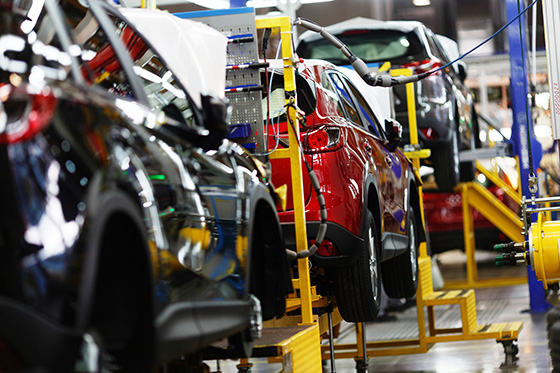
Components such as automotive bodies, industrial equipment frames, and aircraft fittings are exposed to high-temperature environments and therefore require an adhesive layer with performance that exceeds the glass transition temperature (Tg) and heat-resistance specifications.
In general, it is recommended that the Tg of a material be set 30–50°C above the actual service temperature. This helps ensure that the adhesive avoids issues such as plasticization, reduced stiffness, delamination, and cracking in response to temperature increases during use, thermal cycling, and residual stresses.
High-heat-resistant epoxy resins, with their excellent mechanical strength, dimensional stability, and resistance to heat and chemicals, have become indispensable materials in fields such as structural bonding and reinforcement.
Electrical Equipment, Electronic Components, and Motors and Inverters
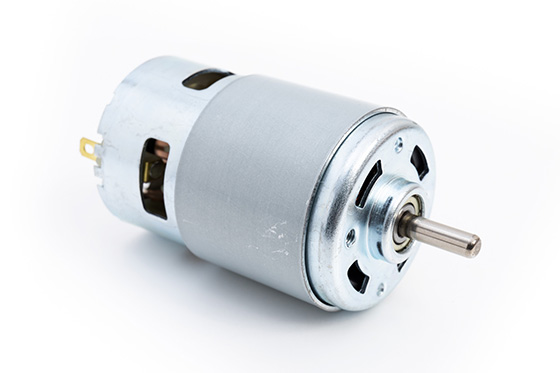
Epoxy resins used to protect coils and terminals in electrical equipment serve as an armor-like barrier that shields electronic components. In motors and inverters, copper wire coils and metal terminals are exposed to high temperatures, moisture, and vibration, making resin-based protection essential.
The most critical requirement is insulation performance. If impurities such as ions (e.g., chloride or sodium) are present in the resin, they can dissolve in moisture and form conductive pathways, leading to metal corrosion and reduced insulation performance.
To ensure resistance to electrical tracking, epoxies designed with low ionic content and low moisture absorption are effective.
In addition, to address heat generation in motors, thermally conductive fillers are often added to the resin; however, improper formulation can make the resin excessively rigid and prone to cracking, so careful attention to the formulation balance is required.
Surface Protection and Coatings
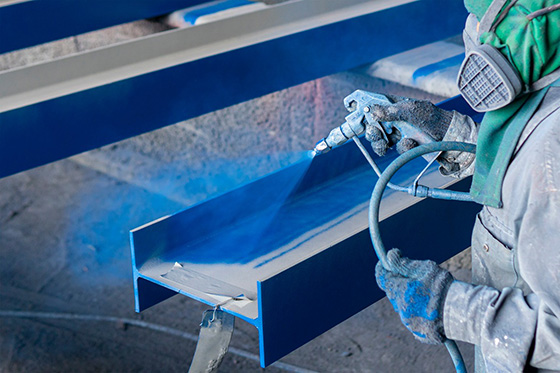
In coating applications for protecting metal surfaces, high-heat-resistant epoxy resins are used in coil coatings and heat-resistant coatings for piping and heat exchangers and as binders for powder coatings.
In these applications, metal pretreatment plays a critical role. Removing oils and contaminants through degreasing, roughening the surface by sandblasting, and applying a conversion coating, such as zinc phosphate, can significantly improve coating adhesion.
By optimizing the baking temperature and curing time, delamination caused by thermal expansion mismatches between the metal substrate and the coating can be prevented, ensuring long-term reliability.
Sealing and Chemical Resistance
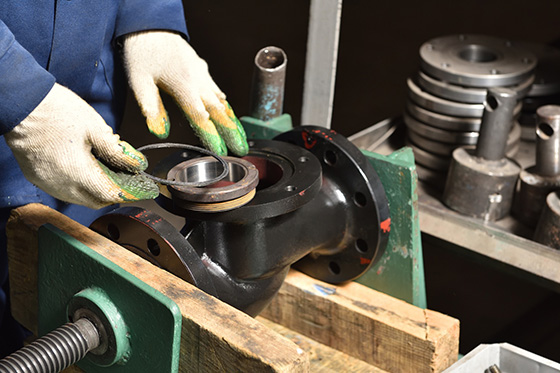
High-heat-resistant epoxy resins play a key role in protecting metals from oils, gases, and chemicals in high-temperature environments, such as in piping gaskets for chemical plants and sealing materials for heat exchangers.
At elevated temperatures, differences in thermal expansion between metals and epoxy resins can make the seal layer prone to delamination and cracking. To address this issue, flexibility is imparted through rubber modification, allowing the seal to accommodate metal expansion and contraction due to temperature changes. In addition, incorporating inorganic fillers such as silica or alumina improves thermal conductivity and dimensional stability, thereby reducing thermal expansion mismatch.
Types of High-Heat-Resistant Epoxy Resins for Metal Applications
The selection of high-heat-resistant epoxy resins for metal applications depends on the required performance and the service environment. From general-purpose bisphenol-based systems to ultra-high-heat-resistant novolac types, each resin type has distinct characteristics, and its performance can be further tailored by combining it with different curing agents.
Resin Types (Examples)
High-heat-resistant epoxy resins used for metal applications are available in various types, depending on the service environment and the required performance.
| Resin Type | Main Characteristics | Key Points |
|---|---|---|
| Bisphenol A / F | ・Most widely used epoxy backbone ・High Tg (180–200°C) |
・Ideal for structural bonding and metal reinforcement ・Suitable for balanced designs combining adhesion, heat resistance, and processability |
| Novolac | ・Phenolic novolac backbone ・Highly multifunctional, enabling high crosslink density ・Excellent Tg, chemical resistance, and dimensional stability |
・Suitable for high-temperature, high-load, and long-term reliability applications (e.g., aerospace, industrial machinery frames) ・Effective for ultra-high Tg and high chemical resistance designs |
| Cycloaliphatic epoxy | ・Low polarity ・Excellent moisture resistance, weatherability, and electrical insulation |
・ Suitable for metals, electronic components, motor impregnation, and coatings ・Meets high insulation, moisture resistance, and weather resistance requirements |
| Multifunctional aliphatic epoxy | ・Aliphatic backbone with multifunctional epoxy groups ・Combines high crosslink density with flexibility ・Available in low-VOC and low-chlorine grades |
・Suitable for structural bonding, impregnation, and coatings subject to thermal expansion mismatch or vibration ・Effective for designs requiring strain tolerance and high heat resistance |
| Water-soluble epoxy / low-chlorine epoxy | ・Water-soluble and compatible with water-based processing ・Low-chlorine design reduces metal corrosion risk ・Environmentally friendly (low VOC) |
・Suitable for metal pretreatment, water-based coating processes, and applications near electronic components ・Effective where environmental compliance, corrosion prevention, and workability are important |
Curing Agent Types (Categories)
Depending on the curing agent type, curing conditions, heat resistance, mechanical properties, and process, suitability can vary significantly.
| Comparison Item | Aromatic Amine/Acid Anhydride Systems | Imidazole/Latent Curing Agent Systems |
|---|---|---|
| Curing temperature | Reaction proceeds in the medium-to-high temperature range (80–170°C). Heating is required, but a well-defined polymer network can be formed. | Reaction proceeds rapidly upon heating. Stable at room temperature, with curing typically starting at around 80–180°C. |
| Characteristic performance | High crosslink density, resulting in high Tg, excellent heat resistance, and superior chemical resistance. Excellent long-term strength retention and chemical stability. | High reactivity and fast curing are key features. Rapid curing upon heating enables B-stage (semi-cured) processing. Good storage stability. |
| Process suitability | Staged curing (“step cure”) and final high-temperature “post-cure” are effective. High performance can be achieved while suppressing residual stress. | Long pot life provides sufficient working time, while a single heating step enables short curing cycles. Well suited for mass production and automated lines. |
| Main applications | Structural bonding and metal coatings used under high-temperature or high-load conditions, e.g., aircraft components, automotive body reinforcement, and metal frame bonding. | Encapsulation and impregnation of electronic components, motors, and inverters, e.g., coil insulation, terminal sealing, and PCB impregnation. |
| Points to note | ・High-temperature curing requires ovens and temperature control equipment. ・Attention must be paid to residual stress during curing. ・Post-curing conditions must be optimized. |
Because the reaction proceeds rapidly upon heating, careful temperature control is required. |
Key Requirements for High-Heat-Resistant Epoxy Resins Used on Metals
When selecting and designing high-heat-resistant epoxy resins for metal applications, it is necessary to satisfy multiple requirements depending on the service environment.
Heat Resistance Indicators
When selecting high-heat-resistant epoxy resins for metal applications, four key indicators of heat resistance are typically evaluated against the service environment: Tg, heat deflection temperature (HDT), continuous operating temperature, and short-term peak temperature resistance.
In practical design, incorporating an adequate safety margin is essential; generally, the continuous operating temperature should be set 30–50°C below Tg. For example, if the Tg is 150°C, the continuous service temperature should be limited to approximately 100–120°C.
It should be noted that Tg values can vary depending on the measurement method and conditions. Therefore, when reviewing specifications, be sure to confirm the measurement method (e.g., DSC, DMA ) and the test conditions (e.g., heating rate and sample state).
Reliability at the Metal Interface
When bonding epoxy resins to metals, there are two key points to consider.
The first point is improving adhesion. By removing oils and contaminants from the metal surface through degreasing, roughening the surface with sandblasting to increase the effective bonding area, and applying a conversion coating, such as zinc phosphate, a strong bond can be established between the metal and the epoxy resin.
The second point is to suppress stresses caused by thermal expansion differences. Because the coefficient of thermal expansion of epoxy resins is typically four to 10 times higher than that of metals, significant stress can develop at the bonding interface during temperature changes, leading to cracking or delamination. To address this issue, flexibility can be introduced by incorporating rubber components into the epoxy resin, or the coefficient of thermal expansion can be brought closer to that of the metal by adding inorganic fillers such as silica or alumina.
Corrosion Resistance and Low-Ion Control
When epoxy resins are used on metals, residual chloride and sodium ions from the manufacturing process can cause metal corrosion. These trace ions can create conductive pathways on metal surfaces in humid environments, thereby accelerating corrosion.
In addition, strict control is required in metal pretreatment processes to minimize ion contamination from cleaning water and chemicals. By managing ionic contamination throughout the entire process, long-term adhesion between the metal and the epoxy resin can be maintained, and the progression of corrosion can be effectively prevented.
Environment, Safety, and Processing
When using epoxy resins for metal applications, three key aspects are important: environmental considerations, safety management, and process optimization.
From an environmental perspective, the use of water-soluble epoxy resins can significantly reduce the amount of organic solvents required. DENACOL’s water-soluble types enable improved adhesion to metals and corrosion resistance while reducing environmental impact.
From a safety management standpoint, uncured epoxy resins and amine-based curing agents can cause dermatitis and eye damage. Therefore, the use of protective gloves and safety goggles, adequate ventilation, and proper heat management during large-scale mixing is essential.
For process optimization, a combination of staged curing and post-curing is effective. Performing an initial cure at a lower temperature, followed by additional curing at higher temperatures, improves heat resistance and dimensional stability; however, careful temperature control is required to balance these benefits against internal stresses from curing shrinkage.
Evaluation and Standards
In the performance evaluation of high-heat-resistant epoxy resins for metal applications, overall suitability is assessed through a combination of tests. In addition to measuring adhesion strength after high-temperature exposure as a fundamental evaluation, various tests are conducted to examine thermal expansion mismatch under temperature changes, adhesion degradation under high-humidity conditions, corrosion risk from saltwater exposure, and insulation performance deterioration in electrical applications.
In addition, by referencing indicators of long-term heat resistance and ultimately evaluating under conditions close to the actual service environment, it is possible to verify practical performance that encompasses not only initial properties but also long-term stability.
Inquiries and Sample Requests
For more information or sample requests, please feel free to contact us.
Inquiry / Sample requestRelated Articles

Eco-friendly Epoxy Resin, GREEN DENACOL
GREEN DENACOL is a bio-based epoxy resin made from plant-derived raw materials. By switching the starting ...
Water-Soluble Epoxy Explained for Industry Professionals
What is Water-Soluble Epoxy Resin? Water-soluble epoxy resins have gained attention in recent years because they offer improved ...
Halogen-Free Epoxy Resin Explained for Industry Professionals
Halogen-free epoxy resin is a type of epoxy resin with a low halogen content. This section explains its standards ...