GREEN DENACOL: A Bio-Based Epoxy Resin Alternative to Bisphenol A
BPA (bisphenol A) is a chemical substance that has become deeply embedded in our daily lives.
However, growing safety concerns in recent years, combined with its reliance on petroleum—a finite resource—as its primary raw material, have led to rapidly expanding demand for alternatives.
This section introduces GREEN DENACOL, a bio-based epoxy developed by Nagase ChemteX. Derived from renewable plant-based materials, it serves as a promising BPA alternative.
Here, we provide detailed insights into its unique characteristics and the strategic benefits of adopting bio-based substitutes.
Table of contents
- Nagase ChemteX's BPA Alternatives
- What is BPA (bisphenol A)?
- Health Effects of BPA
- Characteristics of BPA Alternatives and Comparison with BPA
Nagase ChemteX's BPA Alternatives
Nagase ChemteX is developing environmentally sustainable epoxy compounds.
What is GREEN DENACOL?
GREEN DENACOL is a bio-based epoxy compound developed by Nagase ChemteX, derived from plant-based raw materials.
With growing safety concerns and increasingly stringent global regulations, the demand for BPA alternatives is rising.
As an environmentally conscious material, GREEN DENACOL is attracting attention.
It features a high biobased content and has received environmental certifications, including the USDA BioPreferred® certification and Japan’s Biomass Mark.
Advantages over BPA
While BPA is primarily derived from petroleum—a finite resource—GREEN DENACOL is manufactured from plant-based renewable feedstocks. The photosynthetic process of the source plants absorbs atmospheric CO₂, enabling the product to contribute to carbon emission reductions throughout its entire lifecycle.
BPA raises concerns due to its endocrine-disrupting properties that mimic hormonal activity within the body, prompting regulatory tightening worldwide, particularly in the EU. The use of BPA in food contact applications has been comprehensively banned, with this regulatory trend continuing to accelerate.
In contrast, GREEN DENACOL poses no such concerns regarding endocrine disruption. T The product has received environmental certifications, including USDA BioPreferred® certification and Japan’s Biomass Mark, validating its proven quality and reliability.
What is BPA (bisphenol A)?
BPA is a chemical substance commonly found in everyday plastic products and food packaging materials, characterized by the following properties:
Basic Chemical Structure and Properties of BPA
BPA is an organic compound with the chemical formula (CH₃)₂C(C₆H₄OH)₂, featuring two phenol groups positioned at the center of its molecular structure.
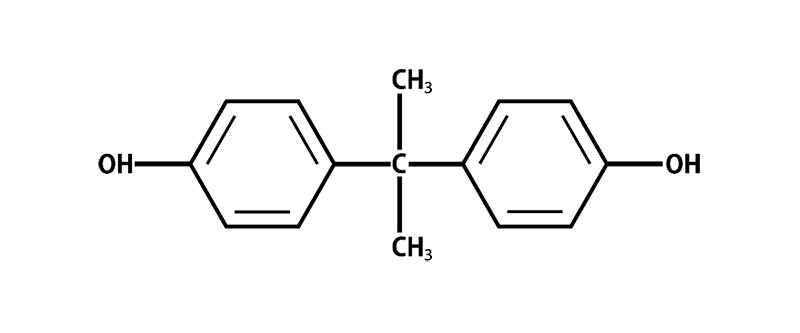
The hydroxyl groups within the phenol groups serve to react with other substances, facilitating intermolecular bonding.
BPA leverages this property to bind with other materials, functioning as a raw material for polymer synthesis. For instance, it is extensively used as a feedstock for plastics such as epoxy resins and polycarbonate resins.
Furthermore, the benzene rings incorporated into BPA's structure are rigid and deformation-resistant, which imparts exceptional durability to BPA-based plastics. Consequently, synthetic resins derived from BPA exhibit superior heat resistance, optical clarity, and mechanical strength, making them invaluable across diverse industrial applications.
Main Products and Applications
BPA is utilized as a color developer in thermal paper and serves as a key raw material for manufacturing synthetic resins, including polycarbonate and epoxy resins. These resins find extensive application in the following products:
- Plastic products such as water bottles and food storage containers
- Internal coatings for canned foods and beverage containers
- Automotive and machinery components
- Insulating materials for electrical and electronic devices
- Construction and civil engineering materials, adhesives, and related products
When BPA is used as a feedstock for synthetic polymers, it becomes integrated into the polymer matrix, which significantly reduces potential health risks.
However, trace amounts of unreacted BPA inevitably remain from the manufacturing process, so these plastic products may contain minimal amounts of BPA.
Environmental Challenges
BPA may be released into the environment during its manufacturing processes as well as during the disposal of products containing BPA. For example, wastewater discharged from plastic manufacturing facilities that use BPA as a raw material, or the improper disposal of BPA-containing products, can result in the release of BPA into rivers and soil. In addition, in the manufacturing processes of ceramic and stone-based products, BPA may also be emitted into the atmosphere.
Because BPA is resistant to degradation in the environment, it can persist for long periods in aquatic environments and soil. Furthermore, BPA present in the environment may be taken into the human body through water and food. BPA has been reported to affect the endocrine system, and exposure during sensitive stages of growth and development is considered to require careful evaluation.
Against this backdrop of concerns regarding environmental and human health impacts, regulations on the use of BPA have been increasingly strengthened worldwide. In particular, in food-contact applications and in the packaging and container sectors, different regulatory frameworks have been adopted by different countries and regions. These can be broadly categorized into countries and regions that employ positive list systems and those that employ negative list systems.
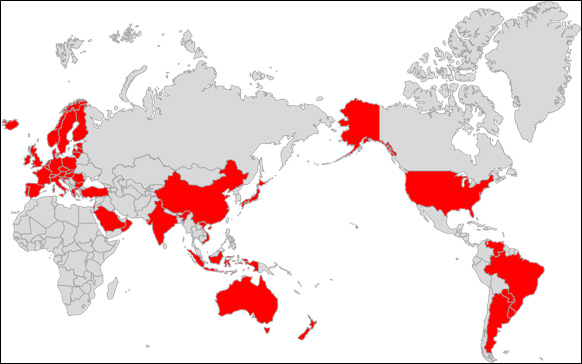
https://www.maff.go.jp/j/shokusan/export/e_process/k_packaging.html#bisphenol_a
Health Effects of BPA
The primary health concern associated with BPA is its "endocrine-disrupting properties." This refers to BPA's ability to mimic hormonal activity or interfere with normal hormone function within the body. Recent research has raised concerns about potential adverse effects from exposure to BPA concentrations significantly lower than previously deemed safe, particularly during vulnerable developmental periods such as fetal growth and early infancy.
The main exposure pathway is oral ingestion of BPA that migrates from polycarbonate food containers and tableware, as well as from internal coatings of canned food products.
In Japan, however, food-contact materials are subject to regulations and safety standards established under the Food Sanitation Act, which are intended to ensure the safety of materials used in contact with food. In addition to these regulatory requirements, domestic manufacturers have proactively addressed potential concerns through the early adoption of alternative materials and ongoing technological improvements. As a result, BPA intake through food and beverages in Japan is considered to be maintained at extremely low levels.
Characteristics of BPA Alternatives and Comparison with BPA
BPA alternatives encompass chemicals with structural similarities to BPA, high-performance resins with entirely different architectures, and plant-derived bio-based materials.
BPS (Bisphenol S)
Characteristics
Two phenol groups connected via a sulfone bridge (SO₂)
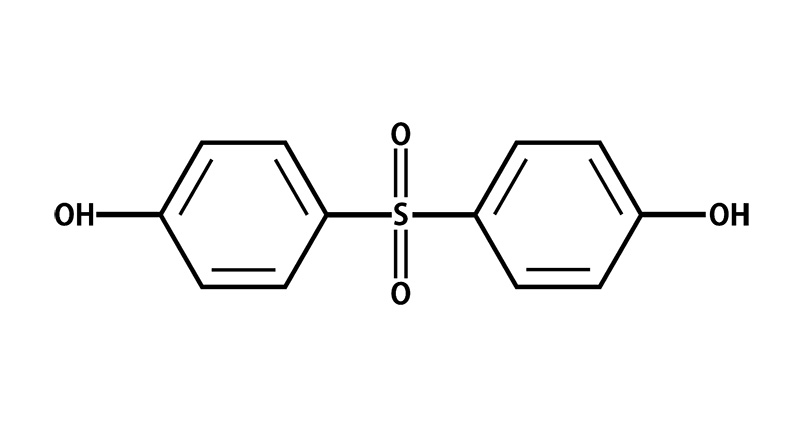
Comparison with BPA
BPS is commonly employed as a BPA substitute. While it has been utilized in banknotes and thermal paper applications, it is suspected of exhibiting endocrine-disrupting properties similar to BPA. In 2023, BPS was added to the candidate list for Substances of Very High Concern (SVHC).
BPF (Bisphenol F)
Characteristics
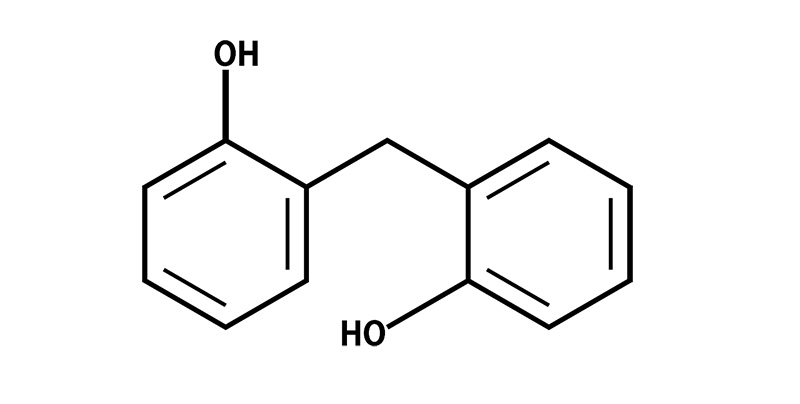
Two phenol groups linked by a methylene bridge (CH₂)
Comparison with BPA
BPF demonstrates superior weatherability and electrical insulation properties, with low viscosity that enhances processability. It serves primarily as a feedstock for epoxy resins and finds application in binding agents for electronic materials and carbon fiber reinforced plastics (CFRP). BPF exhibits hormonal activity comparable to BPA and is considered to possess endocrine-disrupting properties.
TMBPF (Tetramethylbisphenol F)
Characteristics
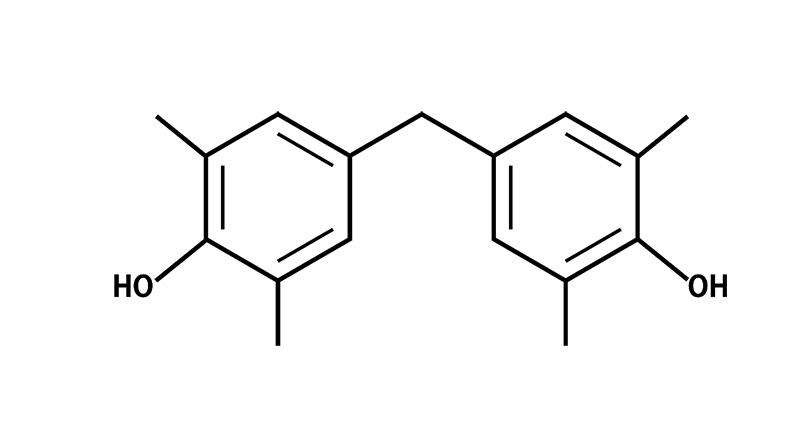
A bisphenol F derivative containing four methyl groups
Comparison with BPA
TMBPF represents a novel bisphenol compound developed as an alternative to both BPA and BPF. It serves primarily as a feedstock for epoxy resins, particularly as a substitute material in applications demanding BPA-free solutions, such as internal coatings for food cans and beverage can linings.
However, recent studies have identified cytotoxic effects in both rat and human stem cell models.
PEEK (Polyether Ether Ketone)
Characteristics
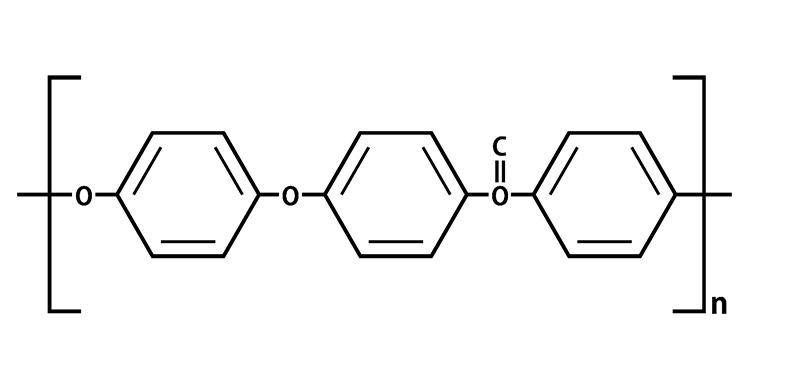
A polymer structure featuring multiple benzene rings interconnected by ether and ketone linkages
Comparison with BPA
PEEK exhibits exceptional heat resistance, mechanical properties, chemical resistance, food safety, and flame retardancy, classifying it as a super engineering plastic.
Since PEEK is manufactured without BPA, it has gained attention as a BPA-free alternative.
However, its exceptionally high strength makes processing challenging, and the material itself commands a premium price.
Plant-Derived Resins (Bio-Based Materials)
Characteristics
Materials whose backbone structure is derived from plant-based feedstocks
Comparison with BPA
Similar to conventional epoxy resins, these materials cure through reactions with various hardening agents, finding applications across diverse sectors including adhesives, coatings, electrical and electronic components, civil engineering and construction materials, and printed circuit boards. While BPA faces usage restrictions in certain applications due to endocrine disruption concerns, plant-derived resins are less susceptible to regulatory constraints.
Nevertheless, challenges may persist regarding material properties and cost considerations, necessitating careful selection based on specific application requirements.
Inquiries and Sample Requests
For more information or sample requests, please feel free to contact us.
Inquiry / Sample request