Resources ~ DENATRON Museum ~ / Research Reports
The World of Innovative High-Performance Materials Pioneered by PEDOT:PSS
HOME > Resources ~ DENATRON Museum ~ > Research Reports > The World of Innovative High-Performance Materials Pioneered by PEDOT:PSS
Ichiro Imae
Associate Professor
Department of Applied Chemistry, Graduate School of Advanced Science and Engineering, Hiroshima University
Research Overview
This study investigates the properties and applications of conductive materials based on PEDOT:PSS (poly(3,4-ethylenedioxythiophene):polystyrenesulfonate). PEDOT:PSS has garnered attention as a next-generation material for flexible electronics and energy conversion due to its excellent conductivity, transparency, and processability. However, the conductivity and mechanical strength of PEDOT:PSS are highly dependent on additives and processing conditions, making it essential to optimize material design and processing methods.
In this study, the incorporation of ionic liquids (ILs), carbon nanotubes (CNTs), and metal oxides into PEDOT:PSS was explored to develop high-strength conductive films that combine flexibility and transparency, as well as high-performance thermoelectric materials. Notably, a method was established to fabricate freestanding films using a simple aqueous process, resulting in composite materials with excellent film-forming ability and mechanical processability.
These findings represent an important step toward the practical application of flexible devices and thermoelectric conversion devices. Through further improvements in material stability and the development of scalable manufacturing technologies, the application of these materials to sustainable energy and environmental technologies is highly anticipated.
Expertise
Organic electronics, thermoelectric materials, smart windows, organic-inorganic hybrids
Main text
The Evolution of Organic Conductors and the Development of PEDOT:PSS
Generally, organic compounds are perceived as insulators. A representative example is polyvinyl chloride (PVC), which is used as the insulating covering for electric cables. We don’t experience electric shocks when we touch electric cables because PVC does not conduct electricity. However, in the early post-war years, a groundbreaking discovery was made by Professors Akamatsu and Inokuchi, who demonstrated that the electrical conductivity of organic compounds could be significantly improved by adding halogens such as bromine to condensed polycyclic π-conjugated compounds like violanthrone and perylene. This phenomenon occurs because some of the π-electrons of the π-conjugated compounds move to the halogens (oxidation reaction), generating positive charges (holes) within the molecule, and these holes can move between molecules, allowing electrical conductivity. This discovery revealed that doping π-conjugated compounds could enable organic materials to conduct electricity, leading to active research in organic conductors.
Furthermore, in the 1970s, Professor Shirakawa developed film-like polyacetylene, which sparked rapid growth in research on conductive polymers as “plastics that conduct electricity”. As a result, the knowledge gained from conductive polymers contributed to the development of organic electroluminescent (EL) displays used in smartphones and flat-screen televisions. While the rise of perovskite-type solar cells has reduced the attention given to organic photovoltaics (OPVs), OPVs too are based on research into conductive polymers.
Among the developments in conductive polymers, PEDOT:PSS (poly(3,4-ethylenedioxythiophene):poly(styrenesulfonic acid)) was also created. PEDOT is synthesized by the chemical oxidative polymerization of the corresponding monomer, 3,4-ethylenedioxythiophene (EDOT), but the PEDOT obtained by this method is an oligomer consisting of 6 to 13 EDOT molecules, which does not have film-forming properties. Therefore, by using high-molecular-weight PSS as a dopant, film-forming properties were successfully introduced. Additionally, because PSS is hydrophilic, PEDOT:PSS has the property of being stably dispersed in water, and it is now commercially available from various reagent manufacturers. For example, Nagase ChemteX Corporation sells Denatron as a formulation product suitable for coating applications. With the availability of water-based PEDOT:PSS dispersions, treatment in an environmentally friendly water system has become possible, and homogeneous thin films can easily be fabricated by spin-coating or drop-casting methods. As a result, practical research in organic electronics has advanced. Particularly, as organic conductive compounds can be used without going through organic synthesis, researchers in physical sciences can conduct detailed measurements of electrical properties, while researchers in biological sciences use it as electrode materials for biosensors, demonstrating its broad applications.
This column introduces the research findings on high-strength transparent conductive films and thermoelectric materials developed using PEDOT:PSS.
Improvement of Mechanical Strength of PEDOT:PSS Thin Films: An Approach Using Sol-Gel Reaction
PEDOT:PSS is widely used as a transparent electrode material and charge transport layer in OPVs due to its ability to form high-transparency conductive thin films on glass or indium tin oxide (ITO) substrates by simply spin-coating its water dispersion. In addition to its reversible color change due to redox reactions, PEDOT:PSS can absorb light in the near-infrared region, making it an attractive material for applications such as smart window dyes and heat-insulating materials. However, since PEDOT:PSS is an organic material and glass or ITO are inorganic materials, they have a “water and oil” relationship, resulting in poor adhesion. As a result, PEDOT:PSS thin films easily peel off the substrate even with a light touch of a finger.
To address this issue, we developed a simple synthetic method to improve the mechanical strength of PEDOT:PSS thin films. This method utilizes the unique reactivity of tetraethyl orthosilicate (TEOS), a silica precursor, through a sol-gel reaction. The sol-gel reaction involves the reaction of polyfunctional metal oxide precursors like TEOS with water, with acid or base acting as a polymerization catalyst, leading to the formation of metal oxides as the reaction progresses.
Since PEDOT:PSS water dispersion contains water as a medium and PSS has sulfonic acid units, it exhibits acidity. Therefore, simply adding a neat liquid TEOS to PEDOT:PSS water dispersion initiates the sol-gel reaction, and by stirring overnight at room temperature, a silica sol containing PEDOT:PSS is obtained. This solution was then applied to a glass substrate and heat annealed at 100°C for 30 minutes in air. The resulting high-strength transparent conductive film was resistant to scratching with a 2H pencil without any damage. Furthermore, using a similar method, we successfully developed a highly durable smart window that does not degrade even after hundreds of electrochemical redox cycles by applying electrochromic active materials to ITO electrodes.
High-Performance Organic Thermoelectric Materials Realized by a Simple Process
For details on organic thermoelectric materials, please refer to Professor Kishi’s column. This section introduces two specific research topics related to PEDOT:PSS, from the development of organic thermoelectric materials. While Professor Kishi’s research demonstrated groundbreaking improvements in thermoelectric performance by adding surfactants to PEDOT:PSS, the focus here is on enhancing the properties of PEDOT:PSS by incorporating ionic liquids (ILs) and single-walled carbon nanotubes (SWCNTs).
First, the case of adding ionic liquids is described. 1-Ethyl-3-methylimidazolium tetracyanoborate (EMIM:TCB) was added to an aqueous dispersion of PEDOT:PSS and stirred overnight. The resulting solution was drop-cast onto a glass substrate and washed with water. Surprisingly, the PEDOT film could be easily peeled off the substrate—almost effortlessly—and floated intact on the water surface. By retrieving the film and drying it on filter paper, a freestanding PEDOT film was obtained, which could be easily cut into desired shapes using scissors or a craft knife, exhibiting excellent flexibility.
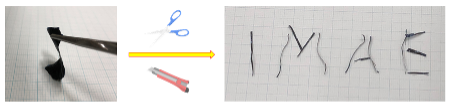
Investigation of this unusual behavior revealed that an ion exchange had occurred between the dopant PSS in PEDOT:PSS and the anionic component (TCB) of the IL. Additionally, the proton in the sulfonic acid group of PSS was found to exchange with the cationic component (EMIM) of the IL. These ion exchange reactions likely reduced the hydrophilicity of the film, allowing it to detach easily from the glass substrate and remain stable in water.
Furthermore, the electrical conductivity of the film was enhanced by nearly 600 times compared to the PEDOT:PSS film without IL, while the Seebeck coefficient and thermal conductivity remained largely unchanged. As a result, the ZT value improved by approximately 500 times.
Next, the effect of adding SWCNTs is described. A commercially available SWCNT aqueous dispersion was mixed with PEDOT:PSS dispersion and cast onto a glass substrate to create a composite film, which was then evaluated for thermoelectric performance. Although the simple mixed film outperformed the individual components, the resulting power factor was about 30 μW/mK2, which was not particularly impressive. This was attributed to residual surfactants—used to disperse SWCNTs in water—remaining in the dried film and acting as insulating contaminants.
To address this, the composite film was immersed in dimethyl sulfoxide (DMSO) for two minutes to remove residual surfactants. After washing, the electrical conductivity dramatically improved from 500 S/cm to 3800 S/cm—an eightfold increase. Electron microscopy revealed clearer bundled structures characteristic of SWCNTs. Interestingly, the electrical conductivity of the composite did not follow a simple weighted average of the two components, but peaked at a composition containing about 75 wt% SWCNTs. Transmission electron microscopy with elemental mapping showed that PEDOT:PSS locally accumulated in the overlapping regions of the SWCNT bundles. This suggests that PEDOT:PSS at the junctions reduced contact resistance, resulting in enhanced electrical conductivity. Consequently, the power factor increased nearly tenfold to 290 μW/mK2, and the ZT value reached as high as 0.13.
Organic thermoelectric materials are not only promising for waste heat recovery but also expected to play an important role in enabling the “trillion-sensor society” (see Professor Okuzaki’s column). These findings highlight the practical significance of these materials, as high-performance thermoelectric films can be easily fabricated by mixing commercially available ILs or SWCNTs with PEDOT:PSS dispersions and washing with water or DMSO.
Conclusion and Future Perspectives
PEDOT:PSS holds great potential for a wide range of applications in organic electronics due to its conductivity, transparency, and ease of processing. In particular, research on high-strength transparent conductive films and thermoelectric materials using PEDOT:PSS has shown significant progress toward practical applications in fields such as organic electronics, biosensors, smart windows, and thermoelectric devices. Our research is also focused on developing new methods and materials to fully leverage the properties of PEDOT:PSS.
Moving forward, we aim to further refine material design and explore the combination of PEDOT:PSS with other high-performance materials to create new functional materials. In particular, we are confident that PEDOT:PSS will play an increasingly important role in application fields that contribute to the realization of a sustainable society, such as energy conversion and storage technologies and environmental purification technologies.
References
[1] I. Imae, Y. Takenaka, D. Tokita, Y. Ooyama, K. Komaguchi, Y. Harima,
“Drastic enhancement of cycle lifetime of electrochromic devices using polysilsesquioxane as an anchoring agent”
Chemistry Letters, vol. 37, no. 9, 964-965 (2008).
DOI: 10.1246/cl.2008.964
[2] I. Imae, D. Tokita, Y. Ooyama, K. Komaguchi, J. Ohshita, Y. Harima,
“Oligothiophenes incorporated in a polysilsesquioxane network: application to tunable transparent conductive films”
Journal of Materials Chemistry, vol. 22, no. 32, 16407-16415(2012).
DOI: 10.1039/c2jm32259e
[3] I. Imae, Y. Nakamura, K. Komaguchi, Y. Ooyama, J. Ohshita, Y. Harima,
“Development of a simple method for fabrication of transparent conductive films with high mechanical strength”
Science and Technology of Advanced Materials, vol. 13, no. 4, 045005 (2012).
DOI: 10.1088/1468-6996/13/4/045005
[4] I. Imae, T. Oonishi, I. S. Isaak, S. Yamamoto, Y. Harima,
“Facile fabrication of transparent conductive graphene/silica composite films with high mechanical strength”
Synthetic Metals, vol. 224, 33-35 (2017).
DOI: 10.1016/j.synthmet.2016.12.020
[5] S. Tsukada, Y. Nakanishi, H. Kai, T. Ishimoto, K. Okada, Y. Adachi, I. Imae, J. Ohshita,
“NIR-shielding films based on PEDOT-PSS/polysiloxane and polysilsesquioxane hybrid”
Journal of Applied Polymer Science, vol. 137, no. 7, 48367 (2020).
DOI: 10.1002/app.48367
[6] L. Zhang, Y. Harima, I. Imae,
“Highly improved thermoelectric performances of PEDOT:PSS/SWCNT composites by solvent treatment”,
Organic Electronics, vol. 51, 304-307 (2017).
DOI: 10.1016/j.orgel.2017.09.030
[7] I. Imae, H. Yamane, K. Imato, Y. Ooyama,
“Thermoelectric properties of PEDOT:PSS/SWCNT composite films with controlled carrier density”
Composites Communications, vol. 27, 100897 (2021).
DOI: 10.1016/j.coco.2021.100897
[8] I. Imae, H. Uehara, K. Imato, Y. Ooyama,
“Thermoelectric properties of conductive freestanding films prepared from PEDOT:PSS aqueous dispersion and ionic liquids”
ACS Applied Materials and Interfaces, vol. 14, no. 51, 57064-57069 (2022).
DOI: 10.1021/acsami.2c16903
[9] I. Imae,
“Potential-step chronocoulometry for robust analysis of charge-transport and thermoelectric behaviors of conducting polymers”
Frontiers in Materials, vol. 12, 1375558 (2025).
DOI: 10.3389/fmats.2025.1375558
Return to list of articles
